
Making Load Testing Part of Your Workflow
How to integrate load testing into your development process so it happens consistently, not just before major releases.
Load testing that only happens before big releases catches problems too late. By then, you're scrambling to fix things under deadline pressure.
Regular load testing catches regressions early, when they're cheap to fix.
The problem with occasional testing
You test before a major release. Everything looks good. Ship it.
Three months later, you test again before the next release. Performance is 40% worse. What changed?
Good luck figuring that out. Dozens of commits, multiple features, infrastructure changes. The regression could be anywhere.
The continuous approach
Test more often. After significant changes. Weekly. On every merge to main. The more frequently you test, the smaller the window where regressions can hide.
When performance degrades, you know it happened recently. The suspect list is short. Finding the cause is fast. This is the core idea behind performance regression testing.
What to test continuously
You don't need to run your full test suite every time. That would be slow and expensive.
Pick critical endpoints. The ones where performance matters most. Test those frequently.
Run comprehensive tests less often — weekly, or before releases. Run focused tests more often — daily, or on every merge.
Automated testing in CI/CD
For teams with mature CI/CD, performance tests can run automatically.
On every pull request: quick smoke test. Does this change break anything obvious?
On merge to main: baseline test against critical endpoints. Compare to stored baselines.
Nightly: comprehensive test suite. Find issues before they compound.
The key is failing builds when performance regresses beyond thresholds. Make performance a gate, not an afterthought.
Manual testing that's still regular
Not everyone has automated pipelines. That's fine. Regular manual testing still works.
Schedule it. Every Monday, run your standard load test. Takes 15 minutes. Document results. Compare to last week. The when to load test guide covers timing in more detail.
The habit matters more than the automation. Consistent testing catches regressions regardless of how the tests are triggered.
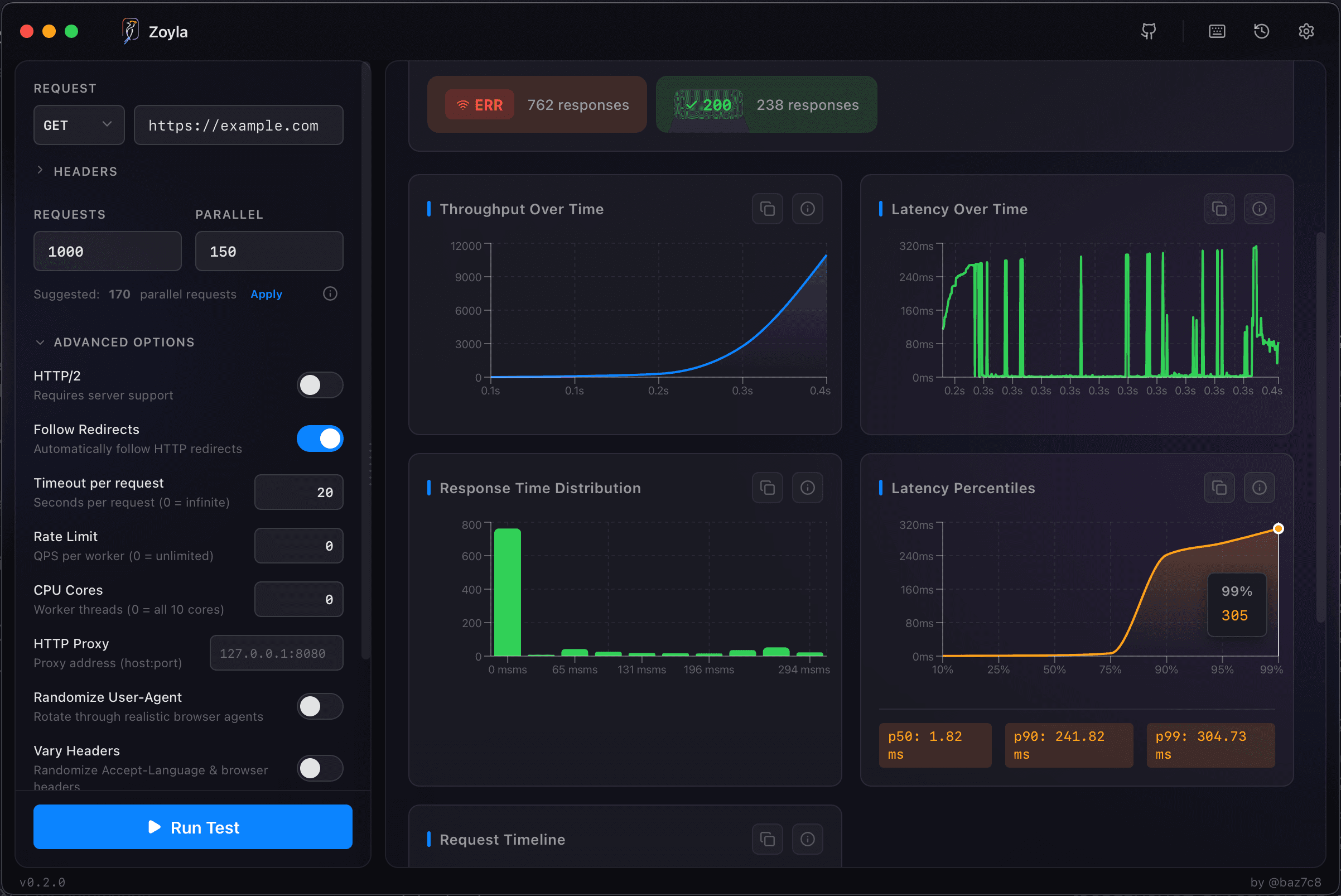
Zoyla makes manual testing quick enough to be practical. Open the app, configure your test, run it, review results. Low enough friction to actually do it regularly.
What to track
Keep a simple log of test results over time. Date, key metrics, any notable changes.
Plot the trend. Is p95 latency creeping up? Is throughput declining? Trends are easier to spot in a graph than in raw numbers.
For more on this, see setting performance baselines.
Responding to regressions
When you catch a regression, investigate immediately. The change is recent. The cause is findable.
Look at recent commits. What touched performance-sensitive code? What changed in dependencies? What infrastructure changes happened?
Often the cause is obvious once you look. A new feature added an expensive query. A dependency update changed behavior. A configuration tweak had unintended effects.
The cultural shift
Making load testing routine requires buy-in. Developers need to see it as part of their job, not someone else's problem.
Start small. Show value. When continuous testing catches a regression before it hits production, celebrate that. Build the case for more testing.
Starting point
If you're doing nothing now, start with this:
- Pick one critical endpoint
- Run a load test against it
- Document the results
- Schedule a recurring reminder to test again next week
- Compare results each time
That's the foundation. Expand from there as you see value. For pre-release testing specifically, see the testing before launch checklist.
The long game
Teams that test continuously have fewer surprises. They catch regressions early. They ship with confidence. They spend less time firefighting production issues.
It's an investment that pays off over time. The first few tests might not find anything. Keep going. When they do find something, you'll be glad you were testing.
For the fundamentals of what to test, start with HTTP load testing explained. And Zoyla's history feature makes tracking results over time automatic — every test is saved, so you can always compare current performance to previous runs.